WINO Tanzania | Reporter
Dar es Salaam. The German Ambassador to Tanzania, Annet Gunther, has highlighted the similarities between the histories of Germany and Tanzania, noting that diplomatic relations between the two countries are among the longest-standing between Germany and an African country.
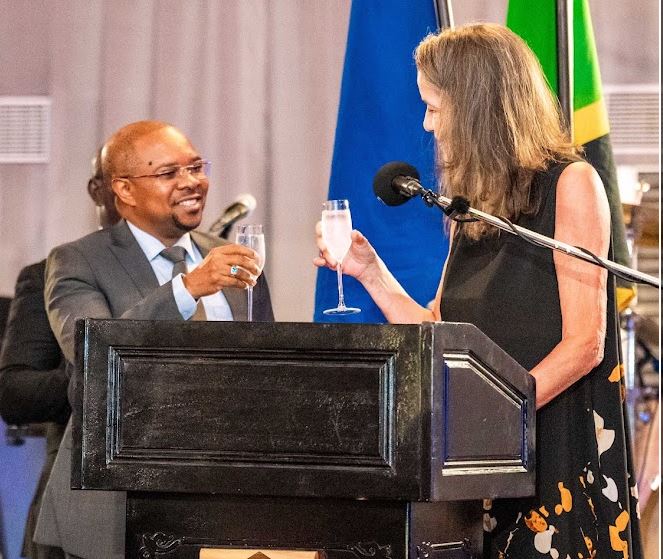
Gunther made the remarks on Thursday during celebrations marking German Unity Day, commemorating the reunification of the German Democratic Republic and the Federal Republic of Germany, which formally took place on October 3, 1990.
“Their determination marked a historical turning point, not only for Germany but also for Europe and the wider world,” Gunther said.
The ambassador said Germany’s history of reunification bears similarities to Tanzania’s own history, where Tanganyika and Zanzibar united in April 1964 to form the United Republic of Tanzania.
“It is a choice that each generation must make anew. Both our countries have been built on the belief that together we are strong and divided we are weakened. As we say in Kiswahili, unity is strength, division is weakness,” Gunther said.
For his part, Tanzania’s Minister of State in the President’s Office, Public Service Management, Ridhiwani Kikwete, said diplomatic relations between Tanzania and Germany are among the longest-standing relations between Tanzania and European countries.
“Although our shared history dates back to the colonial period, a chapter we acknowledge with honesty and maturity, the modern chapter of our bilateral relations is defined by mutual respect, genuine partnership and a shared commitment,” Kikwete said.
He said Germany has been an important development partner and investor in Tanzania, supporting various economic and social sectors, including health and infrastructure.
Kikwete added that as Tanzania undergoes major economic transformation guided by Development Vision 2050, Germany remains an important partner through trade and investment.
“Currently, Tanzania is the second-largest trading partner within the East African Community (EAC), while Germany continues to rank among the top 10 foreign investors in Tanzania,” he said.
The celebrations also highlighted the growing trade relationship between Tanzania and Germany.
Between 2020 and 2024, Tanzania’s exports to Germany reached approximately US$64 million in 2024, while imports from Germany rose to about US$311 million during the same year.
“This demonstrates Germany’s continued importance as a trading partner and also highlights significant opportunities for Tanzania to expand and diversify its exports to the German market,” Kikwete said.
He said there is considerable potential to strengthen bilateral trade through greater market access, value addition and investment in productive sectors, particularly areas where Tanzania has a comparative advantage and where German technology and expertise can add value.
Investment figures also point to growing economic ties between the two countries.
As of October 2025, the Tanzania Investment and Special Economic Zones Authority (TISEZA) had registered 187 German investment projects worth approximately US$535 million, creating 16,427 employment opportunities across various sectors of the economy.
“These figures clearly demonstrate the confidence of German investors in Tanzania and the potential that exists to expand our economic partnership,” Kikwete said.
The Tanzanian Government has called for increased German investment in priority sectors, including manufacturing, agro-processing, energy, infrastructure, technology and skills development, as well as other areas capable of creating decent jobs, strengthening local value chains and accelerating inclusive economic growth.

Dar es Salaam. The German Ambassador to Tanzania, Annet Gunther, has highlighted the similarities between the histories of Germany and Tanzania, noting that diplomatic relations between the two countries are among the longest-standing between Germany and an African country.
Gunther made the remarks on Thursday during celebrations marking German Unity Day, commemorating the reunification of the German Democratic Republic and the Federal Republic of Germany, which formally took place on October 3, 1990.
“Their determination marked a historical turning point, not only for Germany but also for Europe and the wider world,” Gunther said.
The ambassador said Germany’s history of reunification bears similarities to Tanzania’s own history, where Tanganyika and Zanzibar united in April 1964 to form the United Republic of Tanzania.
“It is a choice that each generation must make anew. Both our countries have been built on the belief that together we are strong and divided we are weakened. As we say in Kiswahili, unity is strength, division is weakness,” Gunther said.
For his part, Tanzania’s Minister of State in the President’s Office, Public Service Management, Ridhiwani Kikwete, said diplomatic relations between Tanzania and Germany are among the longest-standing relations between Tanzania and European countries.
“Although our shared history dates back to the colonial period, a chapter we acknowledge with honesty and maturity, the modern chapter of our bilateral relations is defined by mutual respect, genuine partnership and a shared commitment,” Kikwete said.
He said Germany has been an important development partner and investor in Tanzania, supporting various economic and social sectors, including health and infrastructure.
Kikwete added that as Tanzania undergoes major economic transformation guided by Development Vision 2050, Germany remains an important partner through trade and investment.
“Currently, Tanzania is the second-largest trading partner within the East African Community (EAC), while Germany continues to rank among the top 10 foreign investors in Tanzania,” he said.
The celebrations also highlighted the growing trade relationship between Tanzania and Germany.
Between 2020 and 2024, Tanzania’s exports to Germany reached approximately US$64 million in 2024, while imports from Germany rose to about US$311 million during the same year.
“This demonstrates Germany’s continued importance as a trading partner and also highlights significant opportunities for Tanzania to expand and diversify its exports to the German market,” Kikwete said.
He said there is considerable potential to strengthen bilateral trade through greater market access, value addition and investment in productive sectors, particularly areas where Tanzania has a comparative advantage and where German technology and expertise can add value.
Investment figures also point to growing economic ties between the two countries.
As of October 2025, the Tanzania Investment and Special Economic Zones Authority (TISEZA) had registered 187 German investment projects worth approximately US$535 million, creating 16,427 employment opportunities across various sectors of the economy.
“These figures clearly demonstrate the confidence of German investors in Tanzania and the potential that exists to expand our economic partnership,” Kikwete said.
The Tanzanian Government has called for increased German investment in priority sectors, including manufacturing, agro-processing, energy, infrastructure, technology and skills development, as well as other areas capable of creating decent jobs, strengthening local value chains and accelerating inclusive economic growth.
About the Author